Category: Red Wine

  • Barbera, the friendship catalyst

    What do a budding interior designer, a soulful artist, and two out-of-towners have in common? Not much at first sight, but under a very specific set of circumstances, this bunch would find out there’s more than meets the eye. Turns out, when you have prolonged, forced exposure to complete strangers, it’s in fact quite possible for that to change in the course of an evening. 

    Spontaneous reaction

    A long-weekend stay in Austin gave us the chance to check out Birdie’s, a restaurant and wine bar with a highly-recommended wine list, and for good reason. There’s something for everyone, and unlike a typical restaurant wine list, they structure their list beyond the red, white, rosé categorization. They understand that wine is a feeling, and whatever is manifesting in the moment, the wine list guides you to something complementary to create an experience. 

    Even more unusual is the counter service concept, unexpected from a James Beard award winner, yet delightful in its prix-fixe simplicity that invites you to sit back and enjoy. Well, we waited our turn to order at the counter. A wait that had us standing outside in –thankfully–wonderful spring temps for close to two hours. You’ve got to wonder, is it worth the wait? When Barbera is involved, the answer is “Yes”. 

    Common threads

    It struck me that waiting in line to order was a forcing function for conversation. At some point, you start to look around and observe others. Perhaps catch pieces of conversations happening around you, or give in to curiosity and ask the person in front of you what’s in their wine glass. The budding interior designer in front of us was enjoying a Rosé blend of Grenache and Syrah, when her true heart’s desire was a crisp, citrus-forward Txakoli on her birthday. That was enough spark to jumpstart a conversation about our own experience pairing Txakoli and pintxos while visiting the Spanish Basque Country. 

    The line advances. Every inch moves us closer to the restaurant entrance and introduces new topics to the conversation. We learn that her partner, a soulful artist devoted to music, looks to the greats of Classic Rock, Motown  and R&B for inspiration. The conversation takes a turn toward the philosophical: the source of talent, whether it’s a learned ability or something entirely innate that no amount of practice can replicate. Knowingly pointing to the dramatized example of Mozart and Salieri in the film Amadeus. We reach the counter and unanimously ask the hostess if we could all be seated together. 

    Young and vibrant Piedmont

    Uninterrupted and eager to continue the conversation, we’re seated and begin to study the menu. A nod to Rome and quintessential Italian flavors. Our soulful artist tells us about his experience in Northern Italy, where he was introduced to fine examples of Barolo and Barbaresco. Bold tannins captured in fond memories, giving structure to a broadened view of the world. I was drawn in by his conclusion that the experience changed him for the better. I share the exact sentiment from my own travels. 

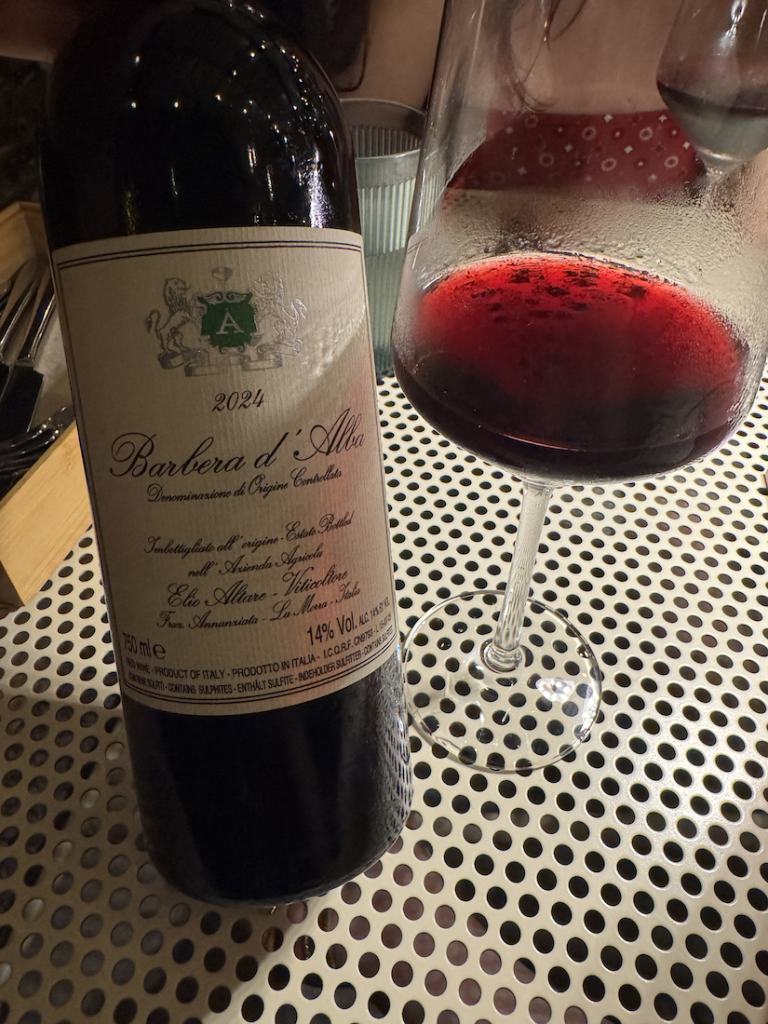
    He turns to me and says “pick a bottle”. I go through the list and spot the perfect pairing: Elio Altare, Barbera d’Alba DOC, La Morra, Piedmont, Italy, 2024

    How this looks in the glass: clear with a medium ruby color 

    On the nose: incredibly aromatic with pronounced floral notes of violet and fresh red fruits, like red cherry, strawberry, red plum. No discernable aromas from oak or spice, which may have been influenced by serving temperature because the bottle was slightly chilled.

    On the palate: dry with high acidity, medium tannins, medium body, and medium alcohol. Medium intensity from primary flavors of ripe, red fruits, like red cherry, strawberry, and red plum. Notable flavors of black fruit I did not detect on the nose, such as blueberry and black plum were also present. No secondary flavors from oak or maturation. Long finish from the ripe, red fruits. 

    Conclusion on drinking potential: this is a very good wine with intense aromas and flavors from ripe fruit that are still detectable in the long finish. The ripe fruit is juicy and can be enjoyed now, even though the high acidity makes it suitable for aging, and will give the wine complexity in aromas and flavors with bottle aging. 
    I could not have picked a bottle more suited to the moment. We didn’t have to wait for years of bottle aging to enjoy this Barbera. Young, budding with promise and potential for aging, it was categorized as “Lush” on the wine list, and matched the luxurious, healthy conversation we shared all evening with new friends. 

  • Bordeaux in focus: Pessac-Leógnan

    Where maritime climate and gravelly soils meet

    My favorite moderating influence in Bordeaux AOC wines takes stage in the left-bank. Proximity to the Atlantic brings rain, the marine layer and a cooling effect to the vineyards. There’s also the sloping, gravelly terroir in Pessac-Leógnan that creates the ideal environment for Cabernet Sauvignon. The soils are well-drained, they collect heat during the day and release it into the roots of the vines at night when the temperature drops. The result is longer ripening and fresh fruit that creates wines with structure and complexity.

    Château Larrivet Haut-Brion

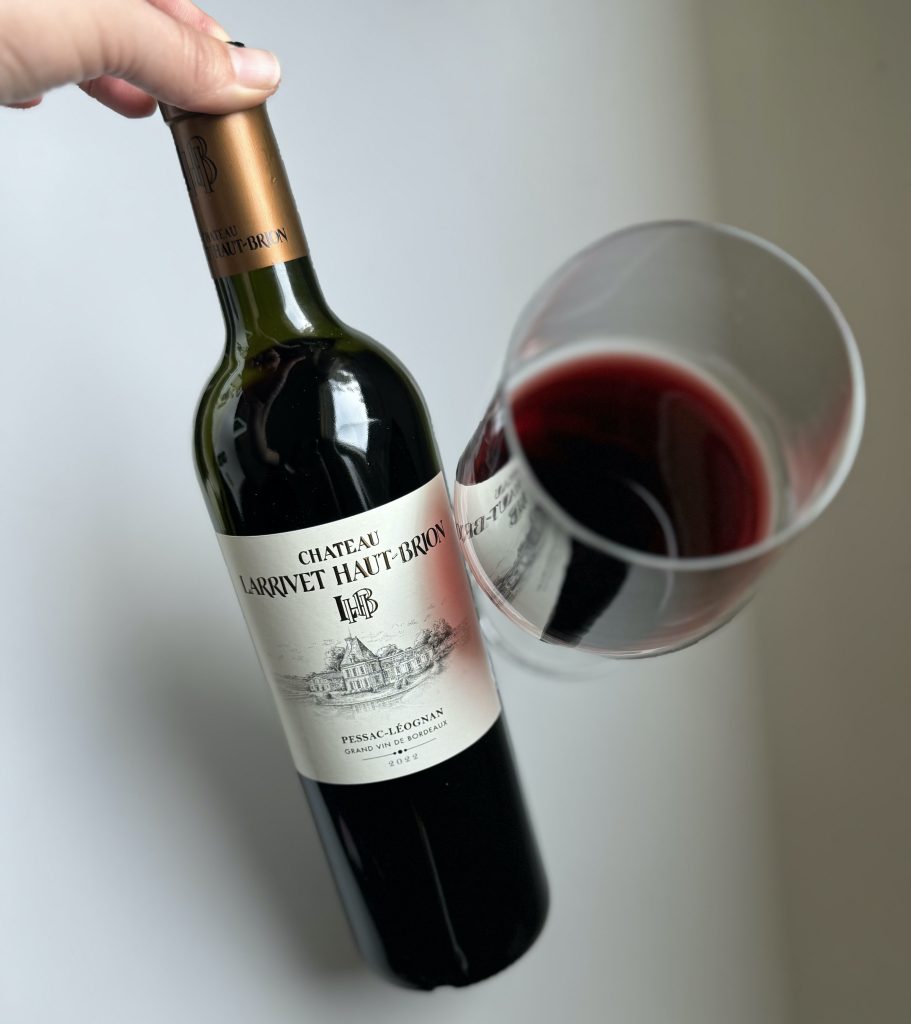
    I picked up a red blend of Cabernet Sauvignon, Cabernet Franc and Merlot from Pessac-Leógnan, excited to try something from the 2022 vintage. It was a hot year, with extreme heat and drought, combined with 50% less rain than the average rainfall from previous decades. The vines had to work extra hard and dig deep for water. Château Larrivet Haut-Brion, Grand Vin de Bordeaux, Pessac-Léognan AOC, 2022 –not to be confused with First Growth Château Haut-Brion– overcame the hot vintage, and is an excellent example of ripe fruit on the nose and palate that’s still fresh.

    How this looks in the glass: it has a clear, deep ruby color all the way to the rim of the bowl.

    On the nose: clean, with pronounced intensity from primary aromas of red fruits, like strawberry and red cherry. There’s also black fruit in this, like blueberry, spice from licorice, and herbal aromas from eucalyptus and mint. The most surprising aromas came from oak and hints of maturation: I could smell vanilla, cloves and a subtle smell of meat that reminded me of honey-baked ham.

    On the palate: this wine is dry, with high acidity, high tannins creating a drying effect on the mouth, full body, and high alcohol. There’s also pronounced intensity from primary flavors of ripe red fruit, like red cherry, strawberry and cranberry. Complex flavors from oak with vanilla and cloves, and signs of maturation with tobacco and wet leaves remaining in the long finish. The meat aromas were not present on the palate. 

    Conclusion on drinking potential: this is a very good wine with complex and intense aromas and flavors from oak and maturation. The long finish shows the pronounced flavors of tobacco and wet leaves. You can enjoy this wine now while it’s young, or let it age in the bottle. The tertiary aromas and flavors could further develop, and I suspect the high acidity and high tannins will soften to achieve more balance over time.

  • Spring wine haul: Crémants and GSMs and Rosé, oh my!

    Yesterday’s wine excursion presented a delightful challenge: how do you decide which wines to try, which to forgo and which to stock up on? AOC Selections invited select distributors to showcase gems in their portfolios, creating impossible choices with over 40 wines available to try on-site at their spring taste & buy event. 

    The benefits of a taste & buy

    Events like this one are the perfect way to try something new without having to commit to an entire bottle. There’s so much upside to trying wines in such a setting.

    Getting out of your comfort zone: you’re going to be exposed to wines that aren’t on your usual rotation. 

    Curated choices: it’s likely the distributor is bringing something you can’t find at the grocery store or a big-box retailer. 

    Sample before you buy: it takes the stress and anxiety out of trying wine. If you don’t like it, you don’t have to finish the pour. Just empty your glass and move on to something else. 

    Ask all the questions: if you like a specific wine, you can ask more about the style, production, vintage, and anything else you want to know from an expert. The reps are showing off their portfolio and are passionate about what they’re pouring into your glass.

    The wines I brought home

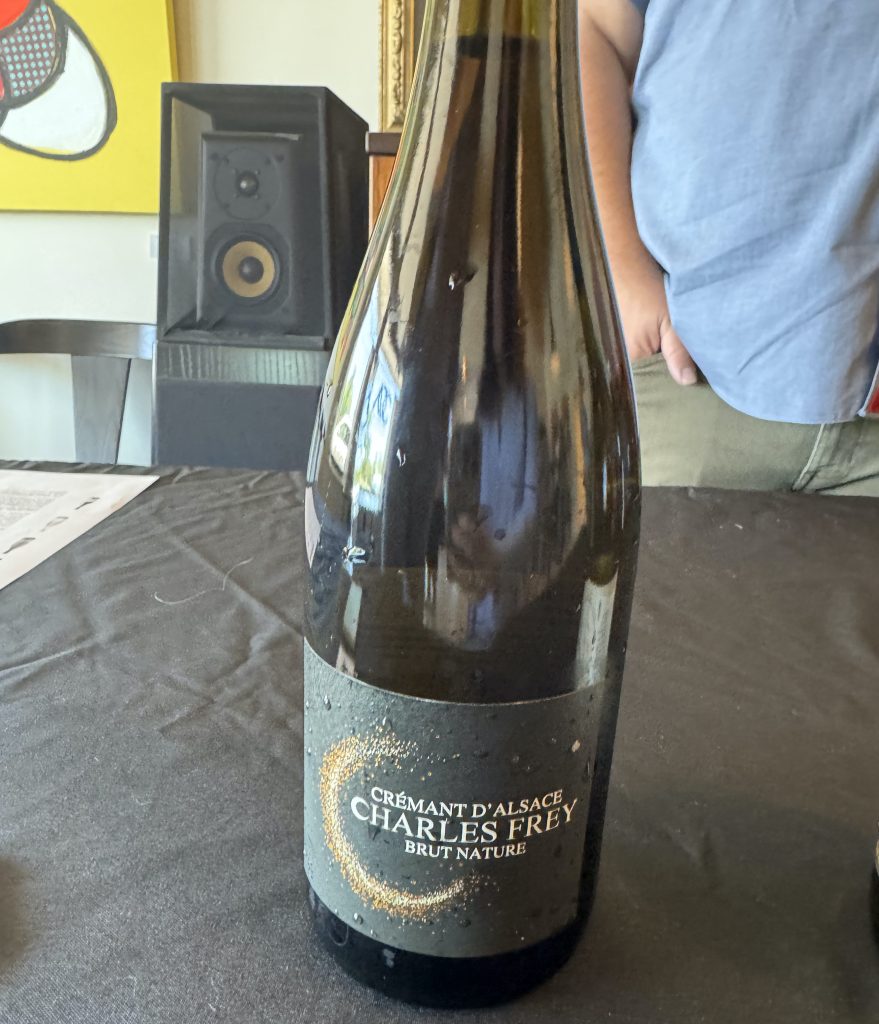
    2023 Charles Frey Cremant d’Alsace – this was such a wonderful example of a sparkling wine with no dosage (sugar/wine mixture) added before final corking. It’s fresh, crisp, and dry with high acidity. I want to try pairing this with oysters. 

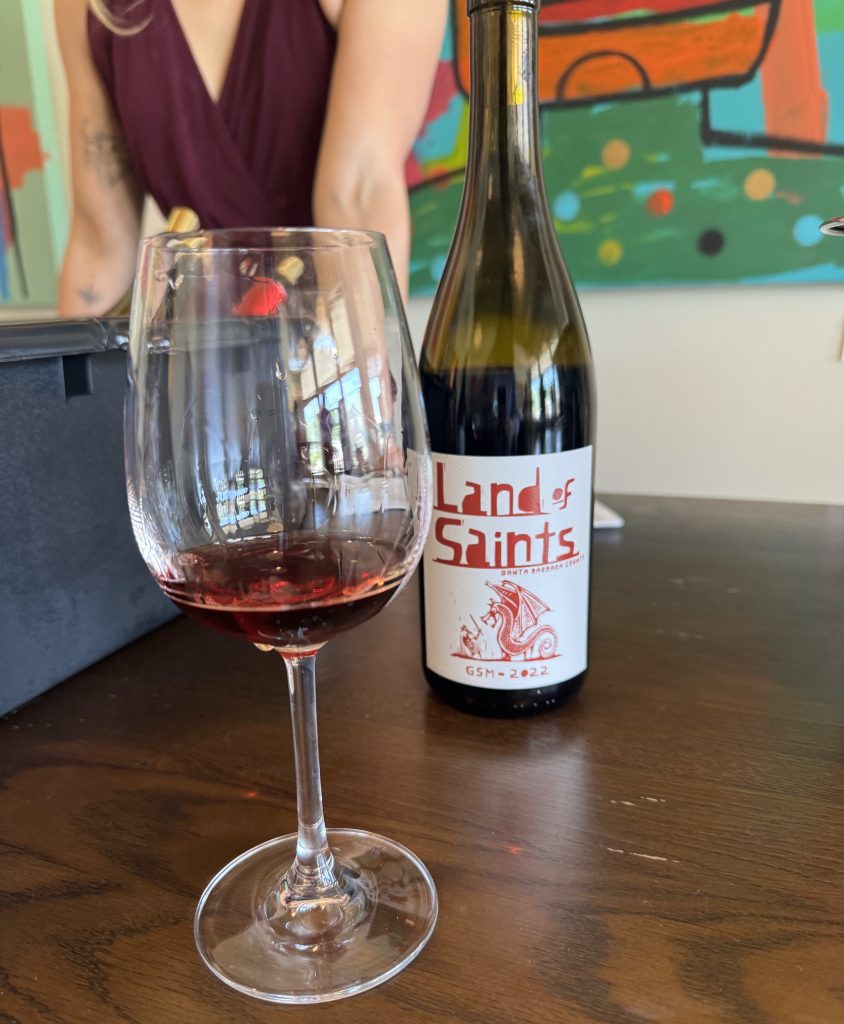
    2022 Land of Saints Santa Barbara GSM – be still, my heart! The nose and palate on this Rhône-style blend brings the whole gang together: Grenache, Syrah, Mourvédre showing ripe red fruit. Definitely reminds me of my favorite Bonne Maman fruit jam.

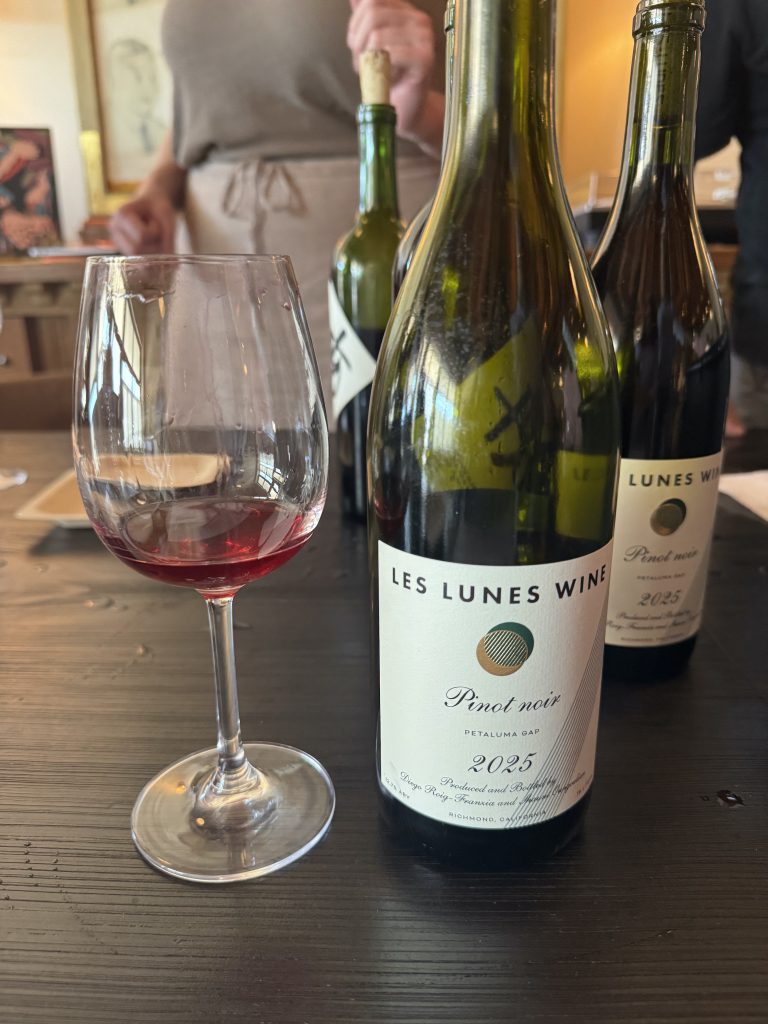
    2025 Les Lunes Petaluma Gap Pinot Noir – to start, this wine is a GORGEOUS fuschia color. It’s also packed with floral aromas of hibiscus and roses. I’d only encountered rose aromas in Gewürztraminer before, so it was a fun discovery.

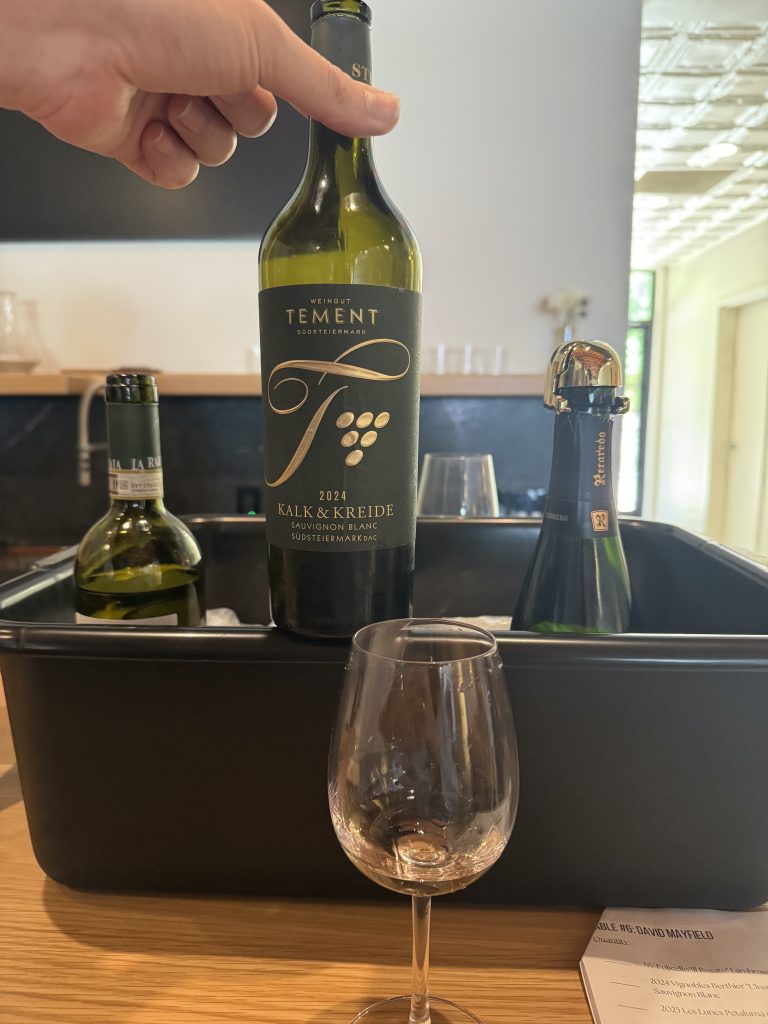
    2024 Tement “Kalk & Kreide” Austria Sauvignon Blanc – the expression on this Sauvignon Blanc is unexpected given the altitude and location in a mountainous region. Where I expected to have more herbaceous aromas and flavors I got tropical fruit: melon, passion fruit, even a little pineapple. I’d like to try this one with my sister, as she has a discerning palate for Sauvignon Blanc.

    Tips to make the most of your experience

    With a little strategy and some trade-offs, you can navigate the tasting room and feel like you’ve covered a lot of ground. Here’s my tried and true approach: 

    1. Taste in a specific order: I start with whites, followed by sparkling, rosé, reds, then fortified or sweet wines. If you have something with lots of tannin or high residual sugar from the start, it’s going to impact your perception on the palate and you’re likely to miss complex aromas and flavors. 
    1. Hydrate and snack along the way: not only does it clean your palate, it helps moderate the effect of alcohol. ABV can vary depending on the wine, and you don’t want to suddenly feel like you’ve run into a brick wall. 
    1. Pass on some bottles: go through the list before you start tasting and consciously decide what you’re not going to try. This helps you get to highly-coveted bottles before the sample runs out, and to reduce tasting fatigue.

  • Chianti Classico and TikTok pasta dishes. The only way we’ll eat our leftovers.

    Chianti Classico and TikTok pasta dishes. The only way we’ll eat our leftovers.

    What’s for dinner? 

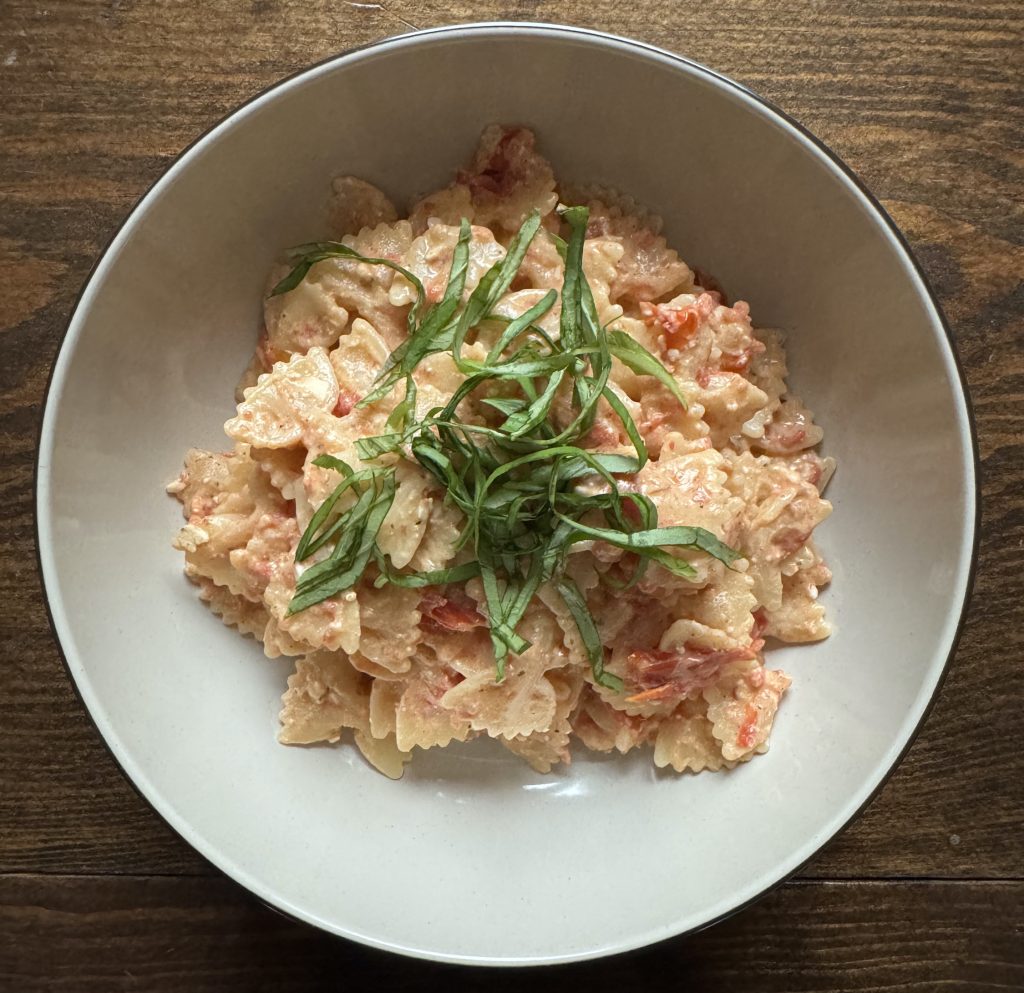
    The eternal question. On the busiest days it grates on my nerves, but it’s also filled with promise. I take stock of what’s in the pantry and fridge and typically pull out dried pasta, cherry tomatoes and a block of feta. My go-to pasta dish combines oven-baked feta, garlic, tomatoes, and Italian parsley to make a creamy sauce that you toss into al dente Farfalle. You know the one: it went viral during the global pandemic of 2020, and it’s still just as good. All that’s left is a trip to Costco or my favorite HEB to pick up missing ingredients. I’ll stroll through the wine section to pick a bottle we can enjoy that day. Usually that’s Chianti Classico.

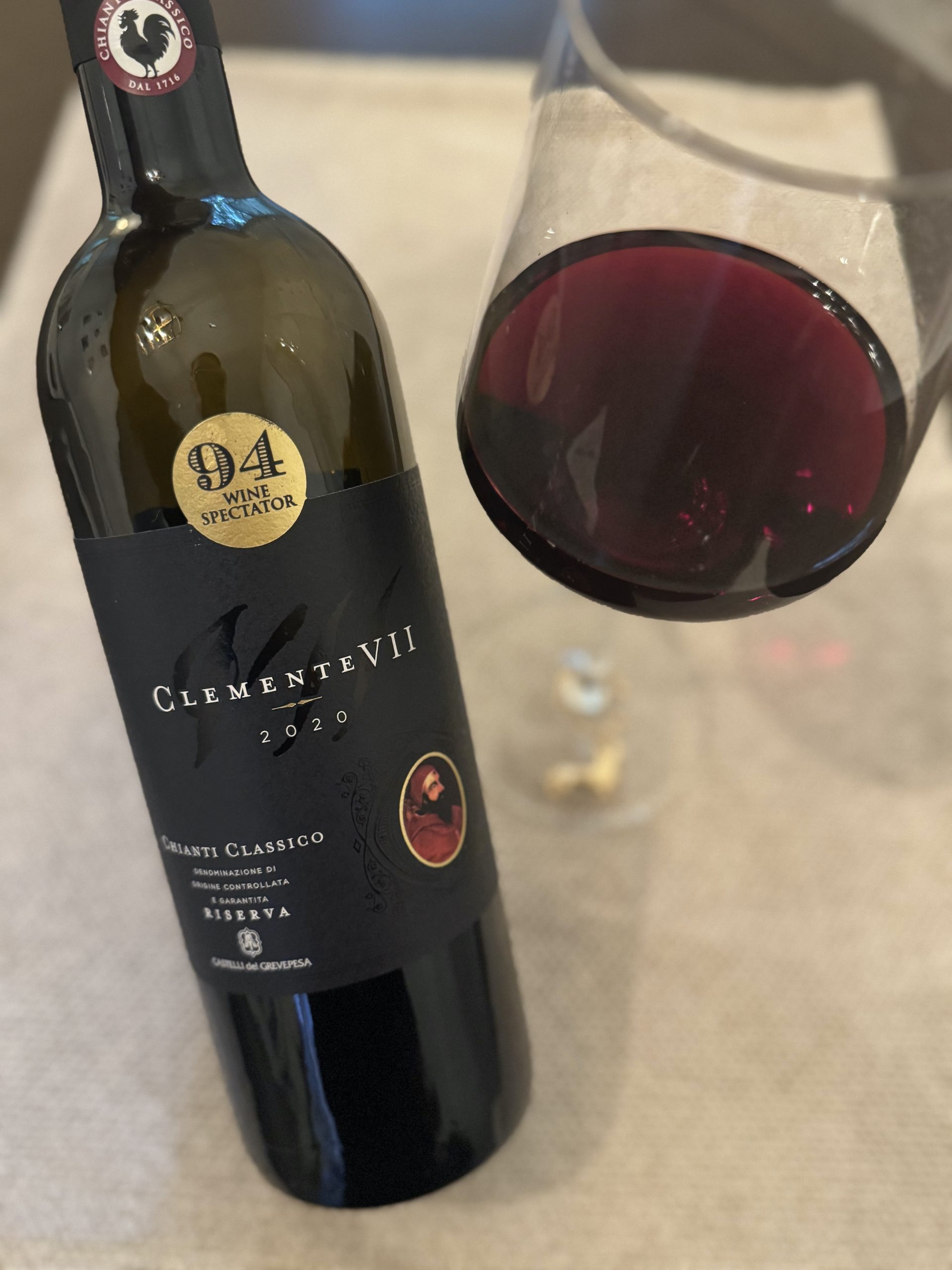
    My pick for this dish: Clemente VII 

    Castelli del Grevepesa Chianti Classico D.O.C.G. Riserva Clemente VII 2020 was a fun Costco find to bring home, in part because of the de Medici reference. Clemente VII was known as Giulio di Giuliano de Medici before he became Pope. He lived in Campoli, within the old, historic part of Chianti Classico where this wine was produced. This Florentine family quite literally bankrolled the Italian Renaissance, the Papacy, and the French monarchy in the 15th century. I expected nothing but greatness. 

    How this looks in the glass: this wine has a clear, dark ruby color that looks garnet on the outer rim of the bowl. 

    On the nose: it has pronounced aromas of ripe red fruits, like cranberry, red plum, red cherry and spice from black pepper.

    On the palate: it has pronounced flavors that match the aromas on the nose from ripe red fruit, like cranberry, red cherry, red plum, and spice from black pepper. It’s dry with high acidity, medium tannins, medium body and medium alcohol with complex secondary flavors of cloves from oak, tertiary flavors from dried fruits such as prunes and dried cranberries, and a long finish. 

    Conclusion on drinking potential: This is a very good wine with intense and complex aromas and flavors prolonged in a long finish. The acidity was high, so it could benefit from bottle aging to bring out more tertiary aromas and flavors. 

    Why it works

    Unlike some of the full body reds that need more contact with oak and time in the bottle to soften tannins, I find Chianti Classico really enjoyable to drink while still young. It can be dry with high acidity, full body and medium tannins, which is a pleasant interaction with food that matches its high acidity. The creaminess and acidity of the feta and tomatoes in my pasta dish neutralized the acidity in the Chianti Classico Riserva, so I was able to taste more of the red fruit on the palate.