Category: White Grape

  • Career Lessons From Chardonnay

    On the heels of International Chardonnay Day this week, I reflected on how surprising this particular grape has been to study and enjoy. I heavily misunderstood its qualities until diving deeper into viticulture and vinification. The greatest surprise was realizing there’s so much Chardonnay can teach us about adaptability, transformation and stepping into your power. In the twists and turns of navigating a career, Chardonnay imparts timeless wisdom. 

    Lesson #1 Grow where you’re planted

    There’s a reason Chardonnay is the most widely planted white grape variety in the world. It has the adaptability to do well in many different types of climates: cool, moderate, even warm regions are well-suited to grow this grape. This gives winemakers a lot of flexibility to produce excellent examples of single-varietal wines with complex aromas and flavors. 

    Early into a career it helps to act like a sponge, absorbing everything in your work environment. You make mistakes and learn to pivot, study the masters in your field and reverse engineer their methods so you learn what ‘good’ looks like. Even for a mid-career or senior professional looking to stay current in their field, it helps to repeatedly ask “What can I learn here?” and “How can I show up as a leader?” when things feel ambiguous and stressful. So much of the current disruption from AI happening in the workforce has us all questioning how to position our value. Objectively assessing the situation to decide how to act is a powerful way to reclaim agency. Staying open-minded to change can compound your growth, and at the same time create value on a team when you’re an “excellent example” for others to follow. 

    Lesson #2 Take in what serves you

    Winemakers using Chardonnay may decide to let malolactic conversion happen to soften the acidity of the wine, and give it a creamy, buttery texture. They could also decide to let the wine spend time in new, toasted oak to introduce aromas and flavors of vanilla and coconut. Chardonnay can take in these factors and bring something complex and exciting to the glass –or it can embrace its potential for high acidity– giving the wine aromas and flavors of citrus and green fruit that make Chardonnay refreshing. The style is completely up to the winemaker. 

    In the workplace the role of winemaker falls on you, and your output is the wine. You decide which factors influence the style of the wine– in this case, the feedback from people you interact with in a meaningful way– like peers, your manager, senior leaders, and stakeholders on a project. Recognize that not all feedback is created equal. The best kind is actionable and given with positive intent to help you grow. Buttery, rich viscosity or crisp acidity on the palate that’s impossible to resist. The worst kind is vague and unhelpful. Focus on the actionable feedback that produces the result you want: a promotion, better projects, a bigger bonus, or perhaps greater autonomy over your work when you join a new team and report to a new manager. 

    Lesson #3 Express yourself unapologetically 

    There’s a certain theatricality to Chardonnay: it shows up differently depending on environmental conditions, and plays the role it needs to with the props at hand. Give it warmth and sunshine, it will express aromas and flavors of tropical fruits, like pineapple, banana, and ripe peaches. Limit sun exposure or introduce cooling factors that delay ripening and it will express aromas and flavors of citrus and green fruits, like lemon and granny smith apple. You get high acidity and tartness that’s strikingly different from ripe fruit. 

    Knowing when and how to speak up in the workplace is an art form learned through trial and error. When you’re in a culture that rewards input and dialogue for opposing opinions, it feels safe to speak up. You show up as energized, charismatic and genuine. When the culture rewards the loudest voices, the stakes feel high. In this case, you may show up as passionate and brave for speaking the quiet, uncomfortable truth. 

    Lesson #4 You can sparkle just as well on your own

    Champagne and many other sparkling wines made in the méthode traditionnelle (traditional method) use Chardonnay along with Pinot Noir and Meunier to create magic in the base wine. Here, Chardonnay serves a key purpose: bringing the foundational structure, citrus aromas and flavors, and refreshing acidity to a bottle that’s meant to be aged. It has an important job to do, and it’s the reliable backbone of the blend, but it can also stand alone. When a sparkling wine is made entirely of Chardonnay it’s known as a Blanc de Blancs. Chardonnay is front and center, the undeniable star that puts elegance and effervescence in special moments. 

          It’s a workplace reality that Performance Management forces you to navigate a system designed to protect an employer’s bottom line.  Forced bell curves– for better or worse– minimize the impact of consistent, steady performers and create a culture of competition. It’s easy to linger on how unfair it is, but a shift in mindset to focus on  opportunity starts by asking yourself “What would it look and feel like to build something of my own?”

    Harness that Blanc de Blancs energy to channel your creativity, effort, consistency, and the intrinsic motivation that drives you to show up for yourself. 

  • Spring wine haul: Crémants and GSMs and Rosé, oh my!

    Yesterday’s wine excursion presented a delightful challenge: how do you decide which wines to try, which to forgo and which to stock up on? AOC Selections invited select distributors to showcase gems in their portfolios, creating impossible choices with over 40 wines available to try on-site at their spring taste & buy event. 

    The benefits of a taste & buy

    Events like this one are the perfect way to try something new without having to commit to an entire bottle. There’s so much upside to trying wines in such a setting.

    Getting out of your comfort zone: you’re going to be exposed to wines that aren’t on your usual rotation. 

    Curated choices: it’s likely the distributor is bringing something you can’t find at the grocery store or a big-box retailer. 

    Sample before you buy: it takes the stress and anxiety out of trying wine. If you don’t like it, you don’t have to finish the pour. Just empty your glass and move on to something else. 

    Ask all the questions: if you like a specific wine, you can ask more about the style, production, vintage, and anything else you want to know from an expert. The reps are showing off their portfolio and are passionate about what they’re pouring into your glass.

    The wines I brought home

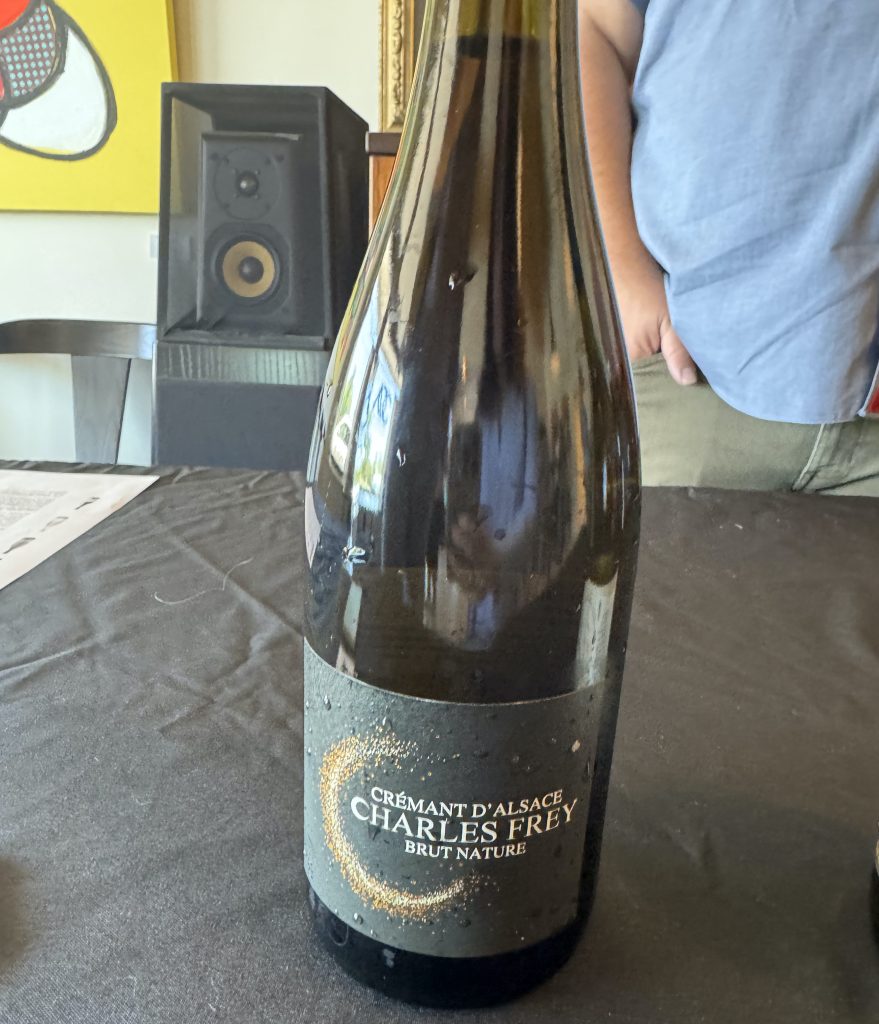
    2023 Charles Frey Cremant d’Alsace – this was such a wonderful example of a sparkling wine with no dosage (sugar/wine mixture) added before final corking. It’s fresh, crisp, and dry with high acidity. I want to try pairing this with oysters. 
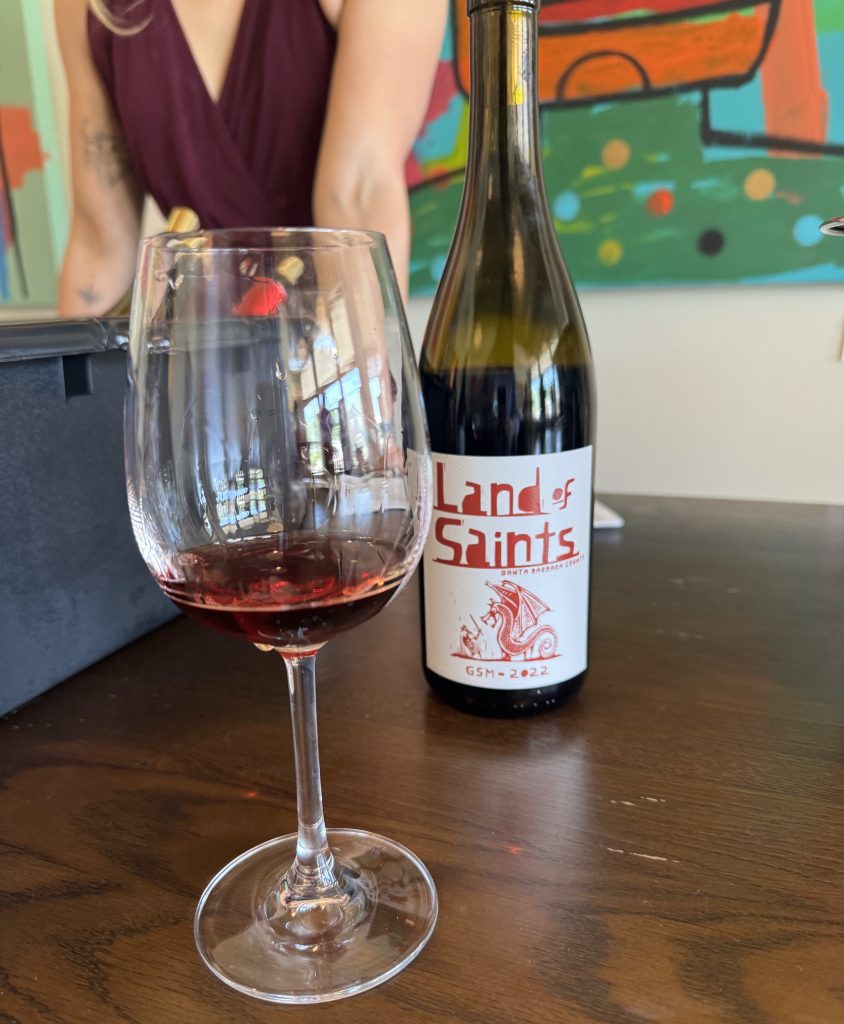
    2022 Land of Saints Santa Barbara GSM – be still, my heart! The nose and palate on this Rhône-style blend brings the whole gang together: Grenache, Syrah, Mourvédre showing ripe red fruit. Definitely reminds me of my favorite Bonne Maman fruit jam.
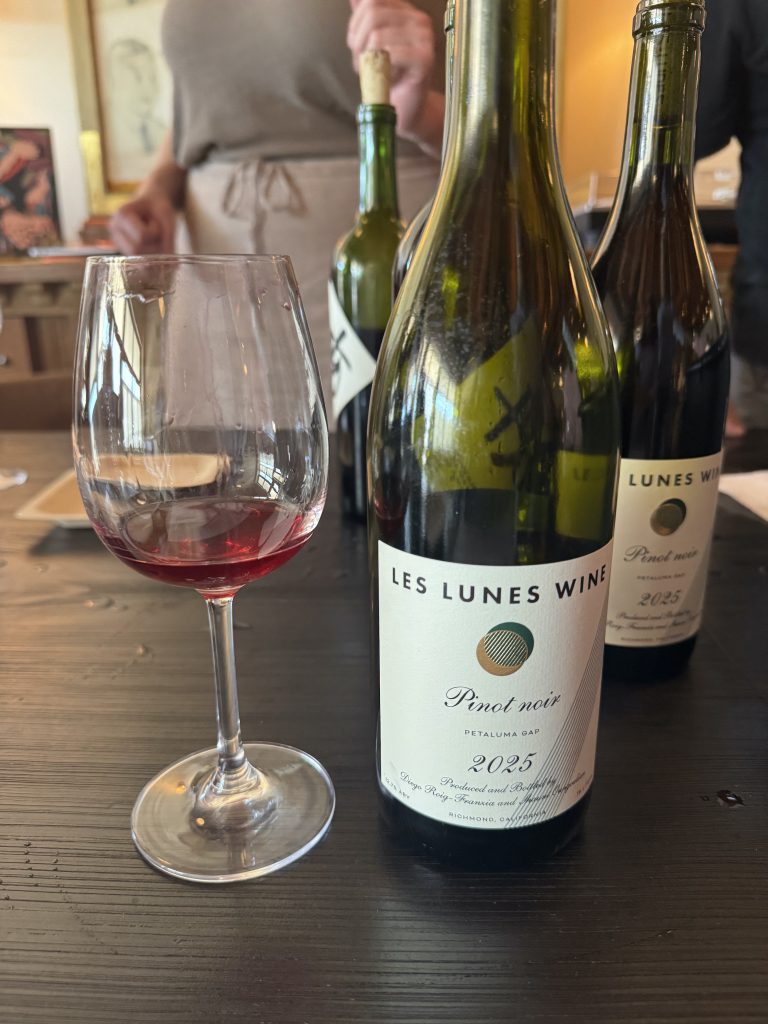
    2025 Les Lunes Petaluma Gap Pinot Noir – to start, this wine is a GORGEOUS fuschia color. It’s also packed with floral aromas of hibiscus and roses. I’d only encountered rose aromas in Gewürztraminer before, so it was a fun discovery.
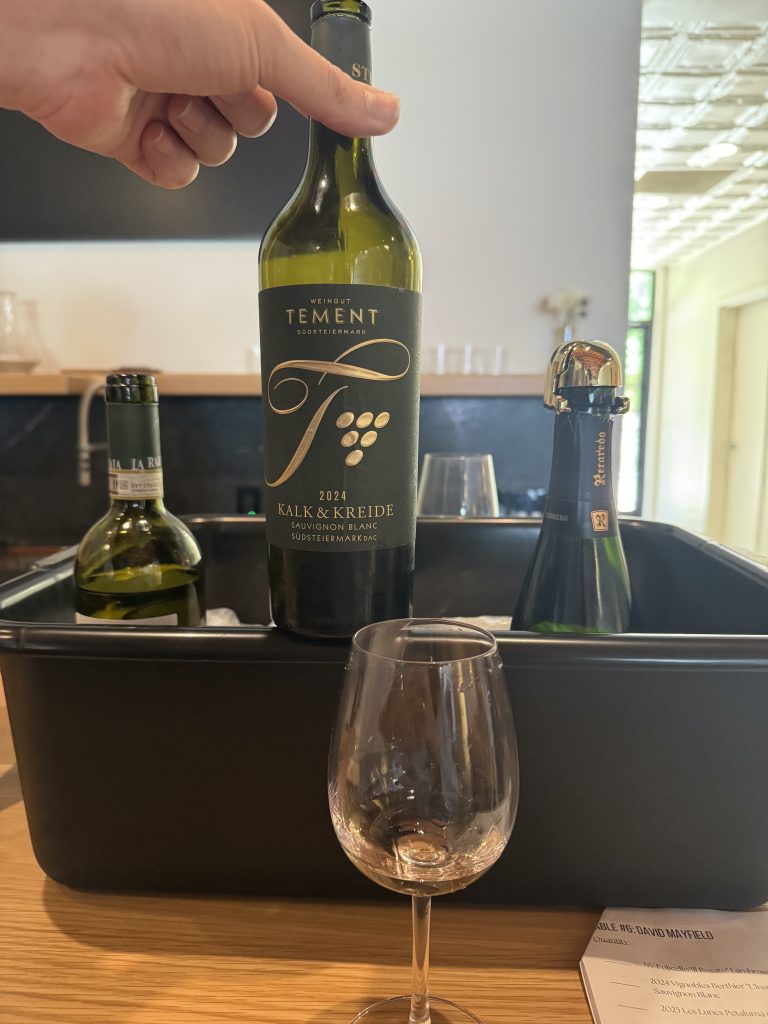
    2024 Tement “Kalk & Kreide” Austria Sauvignon Blanc – the expression on this Sauvignon Blanc is unexpected given the altitude and location in a mountainous region. Where I expected to have more herbaceous aromas and flavors I got tropical fruit: melon, passion fruit, even a little pineapple. I’d like to try this one with my sister, as she has a discerning palate for Sauvignon Blanc.
    Tips to make the most of your experience

    With a little strategy and some trade-offs, you can navigate the tasting room and feel like you’ve covered a lot of ground. Here’s my tried and true approach: 

    1. Taste in a specific order: I start with whites, followed by sparkling, rosé, reds, then fortified or sweet wines. If you have something with lots of tannin or high residual sugar from the start, it’s going to impact your perception on the palate and you’re likely to miss complex aromas and flavors. 
    1. Hydrate and snack along the way: not only does it clean your palate, it helps moderate the effect of alcohol. ABV can vary depending on the wine, and you don’t want to suddenly feel like you’ve run into a brick wall. 
    1. Pass on some bottles: go through the list before you start tasting and consciously decide what you’re not going to try. This helps you get to highly-coveted bottles before the sample runs out, and to reduce tasting fatigue.